
Why 3D modeling is an asset to succeed in its renovation project in Marrakech
Introduction
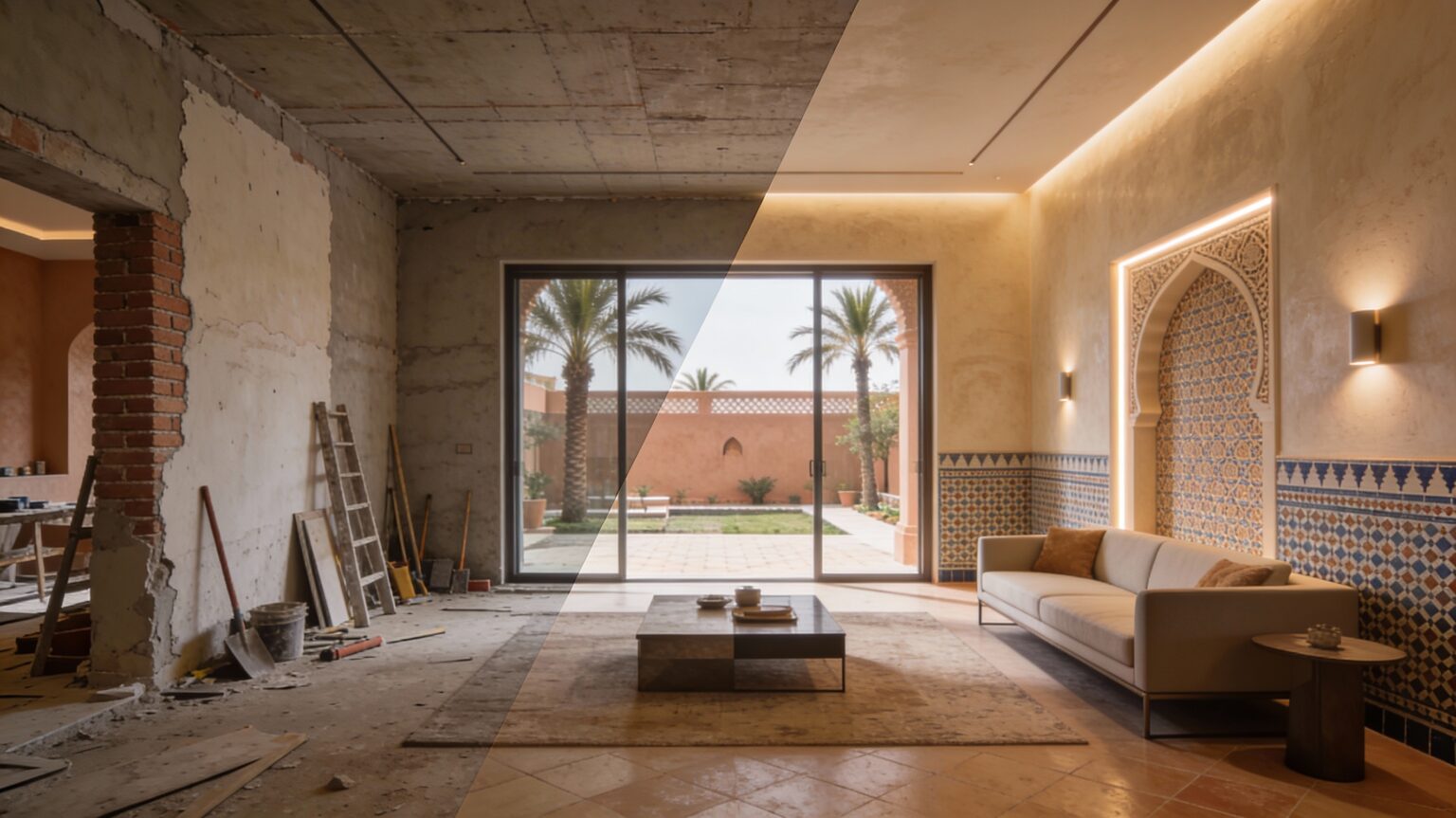
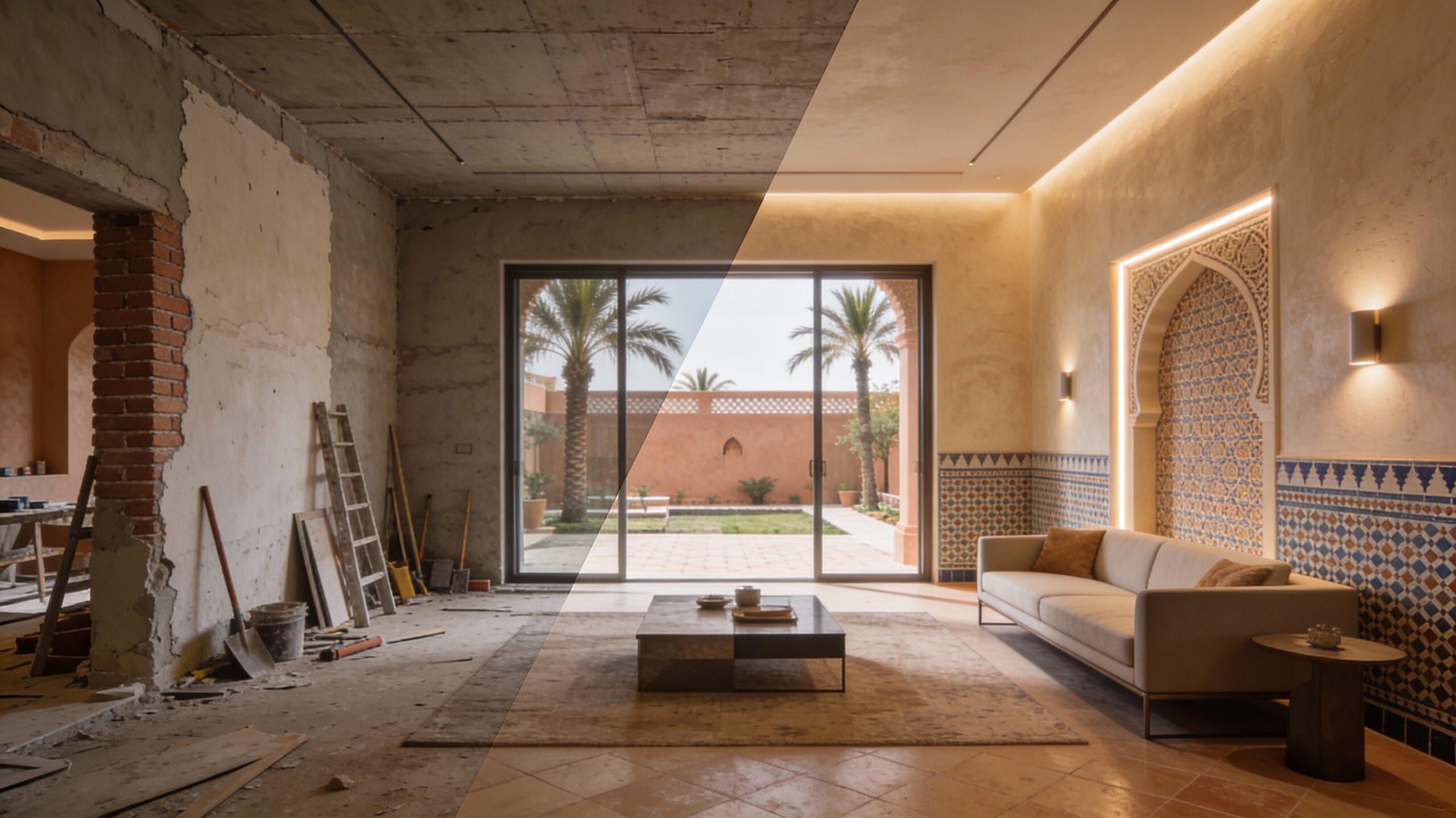
The 3D modeling renovation Marrakech It has become an essential tool for owners who want to transform a villa, apartment or riad. In a city where traditional architecture borders modern constructions, where the climate requires precise technical choices and where local materials require perfect control, the 3D allows to anticipate every detail before the start of the work.
Whether it is a total renovation project, a high-end interior design or the modernization of an old house in the medina, 3D modeling offers a realistic vision of the final result. It helps to avoid errors, to control the budget, to fluidize communication with the artisans and to ensure a rendering that is consistent with what the customer imagines.
In this article, we explain why 3D modelling is a major asset for a successful renovation project in Marrakech, and how SECOND WORK supports its customers with a comprehensive expertise combining design, technical and execution.
1. Why is 3D modelling essential in a renovation project in Marrakech?
Visualize its interior future before the works
3D modeling allows you to:
-
project into the actual volumes,
-
View materials, colours and textures,
-
understand the circulation between the coins,
-
imagine the impact of natural light in every space.
In a city like Marrakech, where the brightness is intense, the solar orientation plays a major role in the perception of an interior. 3D helps anticipate this effect.
Making the right decisions quickly
Thanks to the 3D, the owner can test:
-
several decorative styles (modern, Moroccan, minimalist, chic boho, luxury),
-
different materials (marble, zellige, wood, tadelakt),
-
several furniture configurations,
-
alternative colours or lighting.
This allows the project to be refined without cost.
Reduce technical contingencies
Old riads or villas often require technical adaptations:
-
non-linear walls,
-
differences in height,
-
structural constraints,
-
network management (plumbing, electricity, air conditioning).
The 3D allows to identify these sensitive points before the construction site.
2. 3D modelling: an essential tool for adapting its project to the Marrakesh climate
Optimize natural light management
Marrakech has more than 300 sunny days per year.
The 3D allows you to:
-
analyse the light input,
-
avoid glare zones,
-
define the right locations for blinds, windows and pergolas,
-
choose the right shades to avoid overheating.
Choosing materials suitable for heat
3D helps to visualize:
-
The effect of marble or travertine for freshness,
-
the rendering of wood protected against heat,
-
integration of local materials such as tadelakt or ochre stone.
It also validates aesthetic coherence with Marrakchi architecture.
H3 — Provision for intelligent air conditioning and insulation
Thanks to 3D:
-
air conditioning ducts can be integrated discreetly,
-
internal units may be camouflaged,
-
Isolation can be thought of according to the areas exposed to the sun,
-
ceilings can accommodate lighting and a ductable air conditioning in harmony.
SECOND WORK uses 3D to create aesthetic and technically optimized interiors.
3. The concrete benefits of 3D modelling in a renovation in Marrakech
1. A considerable time-saving
Thanks to 3D, everything is anticipated:
-
no choice left to chance,
-
fewer on-site visits,
-
fast validation of materials.
Work is moving forward faster and more efficiently.
2. Clear communication between artisans and owners
The 3D model becomes the common reference:
-
detailed plans,
-
traffic,
-
materials,
-
finishing levels,
-
installation of the furniture.
The risk of misunderstanding is reduced to zero.
3. A controlled budget from beginning to end
The 3D allows you to precisely encrypt:
-
materials,
-
the labour force,
-
the exact quantities,
-
the associated work.
This avoids bad surprises.
4. A final result that meets 100 per cent expectations
Thanks to the realism of the 3D renderings, the customer knows exactly what he will get — a crucial advantage in high-end projects in Marrakech.
4. How does SECOND WORLD use 3D modelling in its renovation projects?
A complete diagnosis of the existing
Our teams analyze:
-
structural constraints,
-
existing networks,
-
materials in place,
-
brightness,
-
the peculiarities of Moroccan architecture.
Creation of detailed and photorealistic 3D plans
We realize:
-
prospects,
-
development plans,
-
proposals of style,
-
visualisation of materials,
-
simulations of natural light.
Adjustments and changes before launch
The customer may:
-
re-visiting the colors,
-
changing materials,
-
reposition furniture,
-
integrate custom-made elements.
Transition from 3D project to actual project
Our second team ensures:
-
carpentry,
-
plumbing,
-
electricity,
-
air conditioning,
-
coatings,
-
the final decoration.
Each detail corresponds to the validated 3D model.
5. Errors to avoid without 3D modelling
1. Launch work without clear vision
Risk of costly modifications during construction.
2. Underestimating material interactions
Some materials do not fit visually or technically.
3. Poor anticipation of lighting
Without 3D, lighting can be poorly distributed, creating areas that are too dark or too hot.
4. Not predicting structural constraints
Especially in riads where the walls are old and irregular.
3D modelling avoids these traps.
Conclusion — 3D modeling Marrakech renovation: the key to a controlled, aesthetic and sustainable project
The 3D modeling renovation Marrakech is much more than a visual tool: it is a real guide to secure, optimize and harmonize the whole project. It allows you to visualize the future, avoid mistakes, control the budget and achieve a final result that is true to the validated design.
👉 For professional 3D modelling and full support in your renovation project, contact SECOND WORLD today.
Our experts will transform your vision into a concrete, precise and perfectly executed project.
Prev Article: Interior decoration in Marrakech: current trends for villas, riads and modern apartments Next Article: How to use 3D to control budget, deadlines and material choices in Marrakech